

Written by:
Published on:
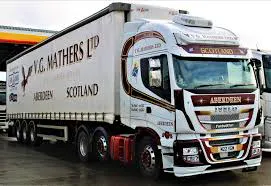
VG Mathers Limited was a long-established haulage business based at Cottown Garage in Kintore, Aberdeenshire. The business traces its roots back to 1968, when it was founded by Vic Mathers. It subsequently became a multi-generational family business led by his son, Colin Mathers.
The company provided general road haulage services alongside vehicle inspection and repair work. Historical information about the business indicates that its fleet included seven trucks and that its haulage operations covered the UK, with occasional European work.
VG Mathers Limited was incorporated in 1994 and operated under SIC code 49410, covering freight transport by road. Its latest filed accounts were made up to 31 July 2025.
Reporting following the collapse indicated that the company had debts of more than £1.2 million, while its assets were valued at approximately £894,000. This illustrates the financial pressure facing the business as it entered liquidation.
Find out more about the process of a company going into liquidation here.
VG Mathers entered liquidation in September 2026, after ceasing trading. Seven employees were made redundant as a result.
Michael Reid, head of insolvency services in Scotland at MHA, was appointed liquidator. His role is to oversee the liquidation process and work with stakeholders and creditors.
The liquidation represents the end of a business that had operated for almost 60 years and reflects wider difficulties across the UK road haulage sector.
The company attributed its collapse to a combination of escalating operating costs and weakening financial resilience.
Fuel was a major pressure, while insurance premiums and vehicle maintenance costs also increased. At the same time, the business faced growing compliance obligations associated with operating commercial vehicles.
Rather than one isolated event causing the collapse, these costs accumulated over time. Colin Mathers said the business had attempted to absorb the increases, but the resulting pressure eventually “choked” its cash flow.
The company also lacked sufficient financial reserves to withstand payment problems or fluctuations in customer demand. This meant that even though the underlying business had decades of trading history and an established customer base, its ability to absorb further shocks had become severely limited.
VG Mathers provides several important lessons for strategic and distressed business buyers.
1. Examine cash flow, not just profitability.
A business can have valuable assets and an established customer base but still fail if it cannot generate sufficient cash to meet short-term obligations.
2. Stress-test operating costs.
Buyers of transport businesses should model fuel, insurance, maintenance, wages and compliance costs under adverse scenarios rather than relying on historic margins.
3. Investigate working-capital requirements.
Payment delays from customers can create serious liquidity problems in industries where costs must be paid before revenue is collected.
4. Assess fleet and asset condition carefully.
For asset-intensive businesses, vehicle age, maintenance requirements and replacement costs can materially change the economics of an acquisition.
5. Look for early intervention opportunities.
The VG Mathers case demonstrates why buyers and advisers should identify liquidity problems early. A distressed acquisition may preserve value that would otherwise disappear through liquidation.
VG Mathers Limited ceased trading and entered liquidation in September 2026, resulting in seven redundancies.
The company cited escalating fuel, insurance, maintenance and compliance costs, combined with cash-flow pressure and fluctuating customer demand.
The company has entered liquidation, so any remaining assets or business opportunities would need to be assessed through the formal liquidation process rather than treated as a conventional going-concern acquisition.
Strategic buyers should prioritise cash-flow analysis, working-capital requirements, operational cost sensitivity and contingent liabilities when assessing distressed transport businesses.
VG Mathers demonstrates how sustained cost inflation can erode the viability of an otherwise established business. For buyers, distress can create opportunities to acquire assets, customers or operational capabilities but only where the underlying economics remain viable after restructuring.
For buyers researching similar opportunities, Administration List’s insolvency search pages can also help identify distressed transport and logistics businesses entering formal insolvency procedures across the UK.