

Written by:
Published on:
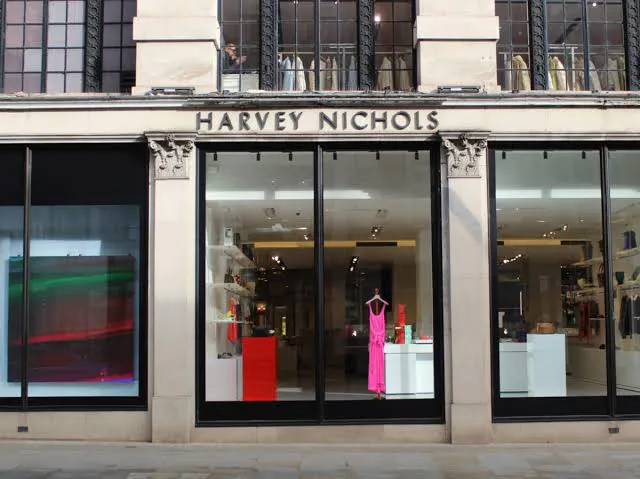
Harvey Nichols began as a linen shop in Knightsbridge in 1831 and developed into one of Britain's best-known luxury department stores. Its offer spans designer fashion, accessories, beauty, food, wine and hospitality. The business expanded beyond its Knightsbridge flagship into regional UK locations and international markets.
Before its administration, the group operated seven stores across the UK and Ireland and five overseas locations, alongside its online operation. Its flagship Knightsbridge store remained the centrepiece of the brand.
However, financial performance deteriorated significantly. Revenue for the year to March 2025 fell approximately 10% to £184.8 million, from £204.8 million a year earlier, while the pre-tax loss increased from £34 million to £49 million. The reported post-tax loss reached £105 million, partly reflecting the write-off of inter-company loans.
Harvey Nichols had not returned to sustained profitability since before the pandemic, with cumulative losses becoming increasingly difficult for the business and its owner to support.
Find out more about the process of a company going into administration here.
The situation became critical in August 2026. Harvey Nichols warned that it could run out of money within a year without new funding, while potential buyers considered rescue options.
On 13 August, Frasers Group acquired Harvey Nichols through a pre-pack administration for a reported £40 million. The transaction included six UK stores, the online business, inventory and international franchise agreements, while the OXO Tower restaurant was excluded. More than 1,000 employees transferred with the acquired operations.
The deal demonstrates how administration can preserve viable parts of a distressed business while allowing an acquirer to restructure liabilities and operations. Frasers has already warned that significant restructuring may follow, including potential changes to the store portfolio.
Separately, Harvey Nichols' Dundrum operation in Ireland entered liquidation, with the High Court told that the company was unable to pay its debts and had net liabilities of €28.2 million.
Harvey Nichols' decline was not caused by a single event. Instead, several pressures compounded over time.
The pandemic disrupted international tourism, an important source of luxury retail spending. The subsequent removal of tax-free shopping for international visitors to Great Britain further weakened the UK's attractiveness to wealthy overseas shoppers. At the same time, inflation and the cost-of-living crisis pressured consumer spending.
The business also faced structural challenges. Online competitors changed luxury shopping behaviour, while some regional stores struggled to generate sufficient returns relative to their operating costs. Analysts have also pointed to underinvestment in digital capabilities and the in-store experience compared with competitors.
The result was a difficult combination: declining revenue, shrinking margins, high fixed costs and continued losses.
1. Separate brand value from business value. A famous brand can attract customers and strategic buyers, but the underlying operation still needs a credible path to profitability.
2. Analyse individual locations. A distressed retailer may contain both valuable and loss-making sites. Buyers should assess each store, lease and market independently rather than treating the portfolio as one asset.
3. Identify structural problems early. Post-pandemic trading problems can sometimes be temporary, but changes in consumer behaviour, taxation and technology may permanently alter the economics of a business.
4. Understand the liabilities. Administration can create an opportunity to acquire valuable assets without inheriting every historic liability, but buyers must understand employee, lease, supplier, tax and customer obligations before completing a transaction.
Is Harvey Nichols still trading after entering administration?
Yes. Frasers Group acquired key operations out of administration, allowing the acquired business to continue trading, although restructuring is expected.
What did Frasers Group buy?
The transaction included six UK stores, online operations, stock and international franchise agreements. The OXO Tower restaurant was excluded.
Why is Harvey Nichols an interesting distressed acquisition?
The business combines a globally recognised luxury brand, established supplier relationships, premium locations and an existing customer base with significant operational and financial problems. That creates the potential for an acquirer with the capital and expertise to restructure the business.
What should buyers learn from the case?
The key lesson is to distinguish between a valuable brand and a sustainable business model. A distressed acquisition should begin with cash flow, liabilities, store economics and the cost of turnaround—not simply the reputation of the target.
For buyers researching similar opportunities, Administration List’s insolvency search pages can also help identify distressed transport and logistics businesses entering formal insolvency procedures across the UK.