

L.K. Bennett Administration Update: Major Store Closures for UK High Street Icon
Written by:
Published on:
Key Takeaways
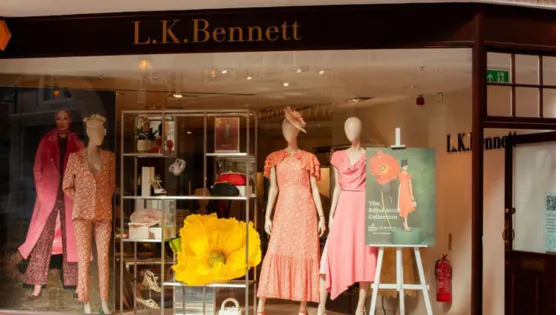
Founded in the 1990s, LK Bennett established itself as a staple of British luxury fashion, known for its high-end footwear and "new season" apparel. The brand operated a significant physical footprint consisting of nine stand-alone boutiques and 13 concession stores located in premium shopping destinations such as London's New Bond Street, Canary Wharf, and Knightsbridge.
Despite its established reputation, the brand became a recent addition to the companies administration in UK records following a turbulent period for the fashion sector. While Gordon Brothers, a firm with a portfolio including Laura Ashley and Poundland, acquired the brand and IP, the 22 physical sites continue to trade only under the administration's mandate. The brand's website continues to facilitate online sales for the foreseeable future, though the physical stores are now undergoing a terminal wind-down.
The business administration process was initiated in late January 2026 to address mounting financial pressures. Immediately following their appointment, the joint administrators secured a transaction for the brand assets, but the exclusion of the retail stores left the physical estate at immediate risk of closure. The stores currently at risk span the UK and Ireland, including major sites at Bluewater, Harrogate, and Westfield White City, alongside concessions within John Lewis and Arnotts.
As the administration continues, a spokesperson confirmed that everything has been reduced to encourage a rapid sell-through of stock. Customers have been invited to shop early to avoid disappointment as the administrators assess the viability of the remaining infrastructure. This move highlights the "liquidity squeeze" facing traditional retailers who struggle to balance high-street overheads with shifting consumer habits.
The collapse of LK Bennett is part of a broader "recalibrating" of the UK economy in early 2026. Firms are increasingly moving away from planning for a return to previous norms and are instead adjusting to a landscape defined by lower growth and higher operational costs. In this environment, business administration is frequently used as a tool to separate valuable brand IP from the burden of legacy leases and high-fixed-asset maintenance.
The current analysis on Administration List for February and March 2026 shows a significant concentration of distress in the consumer-facing sectors. Retailers like Russell & Bromley and Quiz have also faced recent insolvencies, reflecting a "perfect storm" of high employment costs, subdued consumer confidence, and market volatility. This trend suggests that more stressed capital structures will require fundamental action to reposition their underlying businesses in the coming months.
The LK Bennett situation presents a classic opportunity for strategic buyers focused on brand revitalisation and stock acquisition. While the brand IP has already been secured, the remaining store leases in prime London and regional locations may be of interest to competitors looking for market penetration in high-footfall areas.
Acquirers should focus their due diligence on the quality of remaining stock and the potential for "clean" lease negotiations with landlords who are now facing vacancies. The shift toward administration as a restructuring tool means that even iconic brands are being stripped back to their most profitable digital and wholesale components, providing a steady pipeline of physical assets for those looking to consolidate the high-street landscape.
Which specific retail assets are currently at risk? The full list of LK Bennett stores at risk of closing is:
Is there a history of repeat failure for this brand? While LK Bennett has a long heritage, its recent move into administration reflects the systemic pressure on "premium discretionary" fashion brands in the 2026 economy.
Who is managing the LK Bennett wind-down? The process is being overseen by joint administrators from Alvarez & Marsal Europe LLP, who are responsible for the current closing-down sales and asset realisation.
What are the primary risks for an acquirer of the remaining leases? Risks include high business rates and the overall weakening of the labour market, which has increased the cost of staffing premium retail units in the UK.